

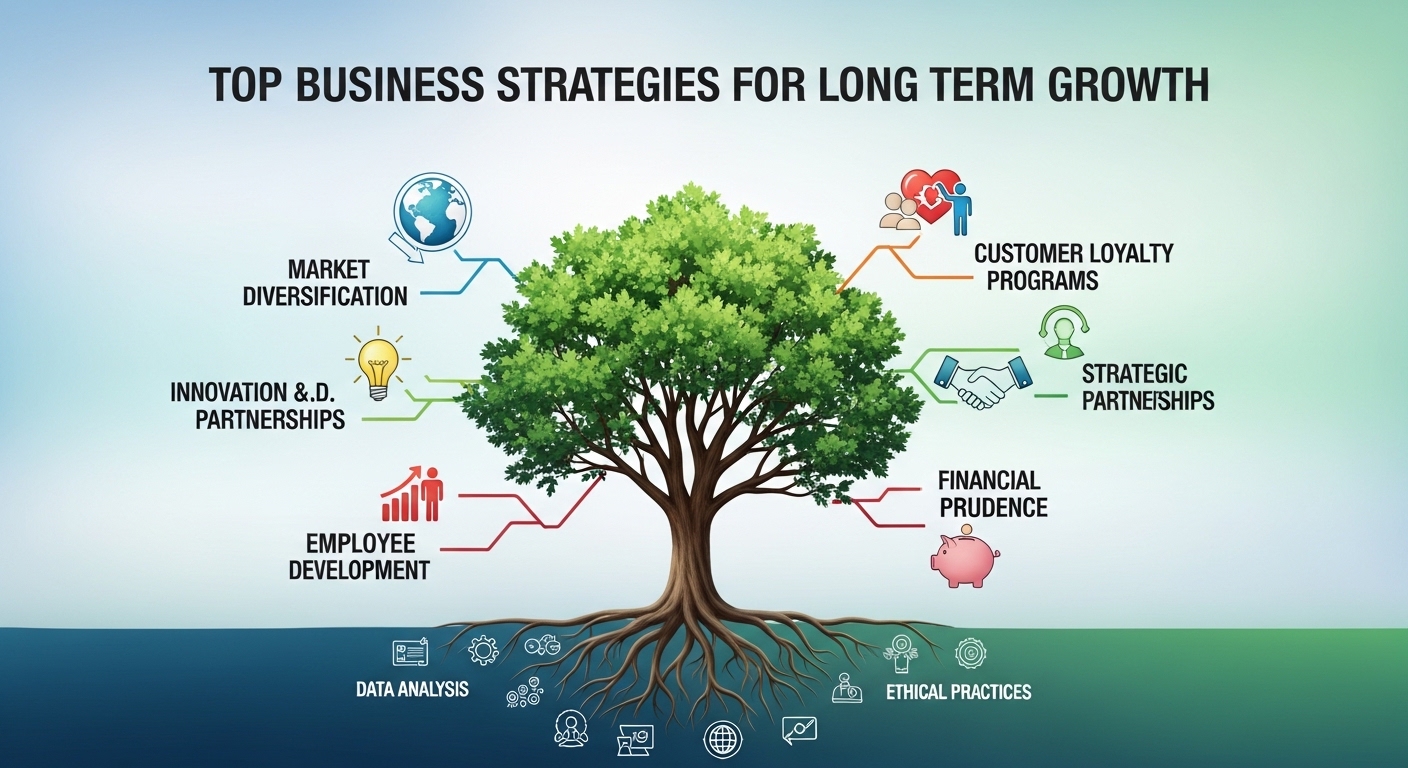
Long-term business growth is not achieved overnight; it requires strong planning, consistent execution, and smart decision-making. Successful companies focus on building sustainable systems, understanding market trends, improving customer experience, and adapting to change. With the right strategies, any business can grow steadily, remain competitive, and achieve lasting success in an evolving global marketplace.
Clear Vision and Long-Term Planning
Setting business direction
A clear business vision helps define where the company is heading in the future. It guides decisions, aligns teams, and ensures all efforts contribute toward long-term success and sustainable growth in a competitive market environment.
Strategic goal setting
Setting realistic and measurable goals allows businesses to track progress effectively. Clear goals improve focus, increase productivity, and help organizations stay aligned with long-term growth objectives and overall company mission.
Market understanding
Understanding market trends is essential for long-term planning. It helps businesses identify opportunities, customer needs, and industry shifts, enabling better decisions that support sustainable development and competitive advantage over time.
Risk planning
Effective risk planning protects businesses from unexpected challenges. By preparing for uncertainties, companies can reduce losses, maintain stability, and ensure continuous growth even during difficult market conditions or economic changes.
Vision consistency
Maintaining consistency in business vision ensures long-term success. It helps organizations stay focused, avoid distractions, and build a strong foundation for steady growth and sustainable performance in the future.
Customer-Centric Approach
Understanding customer needs
Successful businesses focus on understanding customer needs deeply. This helps create better products and services that match expectations, increase satisfaction, and build long-term loyalty and trust with customers.
Customer feedback use
Using customer feedback allows businesses to improve continuously. It helps identify weaknesses, enhance service quality, and develop solutions that better meet customer expectations and market demands effectively over time.
Strong customer relationships
Building strong relationships with customers increases retention and loyalty. Trust-based relationships encourage repeat business and positive word-of-mouth, supporting long-term growth and brand reputation in competitive markets.
Personalized experience
Personalization improves customer satisfaction by offering tailored products and services. It makes customers feel valued, increases engagement, and strengthens long-term business relationships and loyalty significantly over time.
Customer support quality
High-quality customer support is essential for business success. Quick responses, problem-solving, and helpful communication improve customer trust and ensure long-term satisfaction and brand reliability.
Financial Management Strategy
Budget planning
Proper budgeting ensures efficient use of financial resources. It helps businesses control expenses, allocate funds wisely, and maintain financial stability for long-term sustainable growth and expansion.
Cash flow control
Managing cash flow is critical for business survival. It ensures smooth operations, timely payments, and financial balance, helping businesses avoid financial stress and maintain steady growth.
Investment decisions
Smart investment decisions contribute to long-term profitability. Businesses must evaluate risks and returns carefully to ensure capital is used effectively for growth and expansion opportunities.
Cost reduction methods
Reducing unnecessary costs improves profitability. Efficient operations, resource optimization, and smart purchasing decisions help businesses save money while maintaining product and service quality.
Financial forecasting
Financial forecasting helps predict future performance. It supports better planning, reduces uncertainty, and allows businesses to make informed decisions for stable long-term growth.
Innovation and Technology Adoption
Embracing digital tools
Using digital tools improves efficiency and productivity. Businesses can automate tasks, manage operations better, and stay competitive in a technology-driven market environment.
Product innovation
Continuous product innovation helps businesses stay relevant. Developing new features and improving quality attracts customers and supports long-term growth and market expansion.
Automation systems
Automation reduces manual work and increases efficiency. It helps businesses save time, reduce errors, and improve overall operational performance significantly.
Data-driven decisions
Using data for decision-making improves accuracy. Businesses can analyze trends, understand customer behavior, and make smarter strategic choices for better growth outcomes.
Technology adaptation
Adapting to new technology ensures competitiveness. Businesses that embrace change can improve performance, reduce costs, and achieve long-term sustainable success.
Strong Brand Building
Brand identity creation
A strong brand identity helps businesses stand out. It includes logo, message, and values that create recognition and trust among customers in the market.
Consistent branding
Consistency in branding builds trust and recognition. Uniform messaging across platforms strengthens brand image and supports long-term customer loyalty and engagement.
Reputation management
Maintaining a good reputation is essential for growth. Positive reviews and ethical practices help build trust and attract more customers over time.
Marketing strategy
Effective marketing strategies increase visibility and customer reach. Businesses can attract new audiences and strengthen their position in competitive markets.
Brand storytelling
Storytelling creates emotional connections with customers. It helps businesses communicate values and build stronger relationships that support long-term growth.
Employee Development and Leadership
Skill development
Training employees improves skills and productivity. Skilled workers contribute more effectively to business growth and long-term success.
Leadership quality
Strong leadership guides businesses toward success. Good leaders make better decisions and motivate teams for improved performance.
Employee motivation
Motivated employees work harder and stay loyal. This improves productivity and supports long-term organizational growth.
Team collaboration
Effective teamwork enhances productivity. Collaboration ensures better problem-solving and faster achievement of business goals.
Workplace culture
A positive workplace culture improves employee satisfaction. It supports retention, productivity, and long-term business stability.
Market Expansion Strategy
New market entry
Entering new markets increases business opportunities. It helps companies grow revenue and expand customer base globally.
Product diversification
Offering new products reduces risk and increases revenue streams, supporting long-term business stability.
Global expansion
Expanding internationally increases brand reach and profitability in new regions.
Partnership strategy
Business partnerships improve resources, reach, and capabilities for stronger growth outcomes.
Competitive analysis
Studying competitors helps businesses improve strategies and maintain market advantage.
FAQs
What is the key to long-term business growth?
Consistent planning, innovation, and customer focus are key.
Why is customer satisfaction important?
It increases loyalty and supports repeat business.
How does innovation help businesses?
It keeps businesses competitive and relevant in markets.
Why is financial management important?
It ensures stability and supports sustainable growth.
What role does branding play?
It builds trust and attracts long-term customers.
Conclusion
Long-term business growth depends on strong planning, customer focus, innovation, financial discipline, and effective leadership. Businesses that adapt to change, invest in people, and build strong brands achieve sustainable success. With the right strategies and consistent effort, any organization can grow steadily, remain competitive, and build a stable future in the ever-changing global market environment.
